On this page
Star History Monthly Feb 2026 | Clawflare
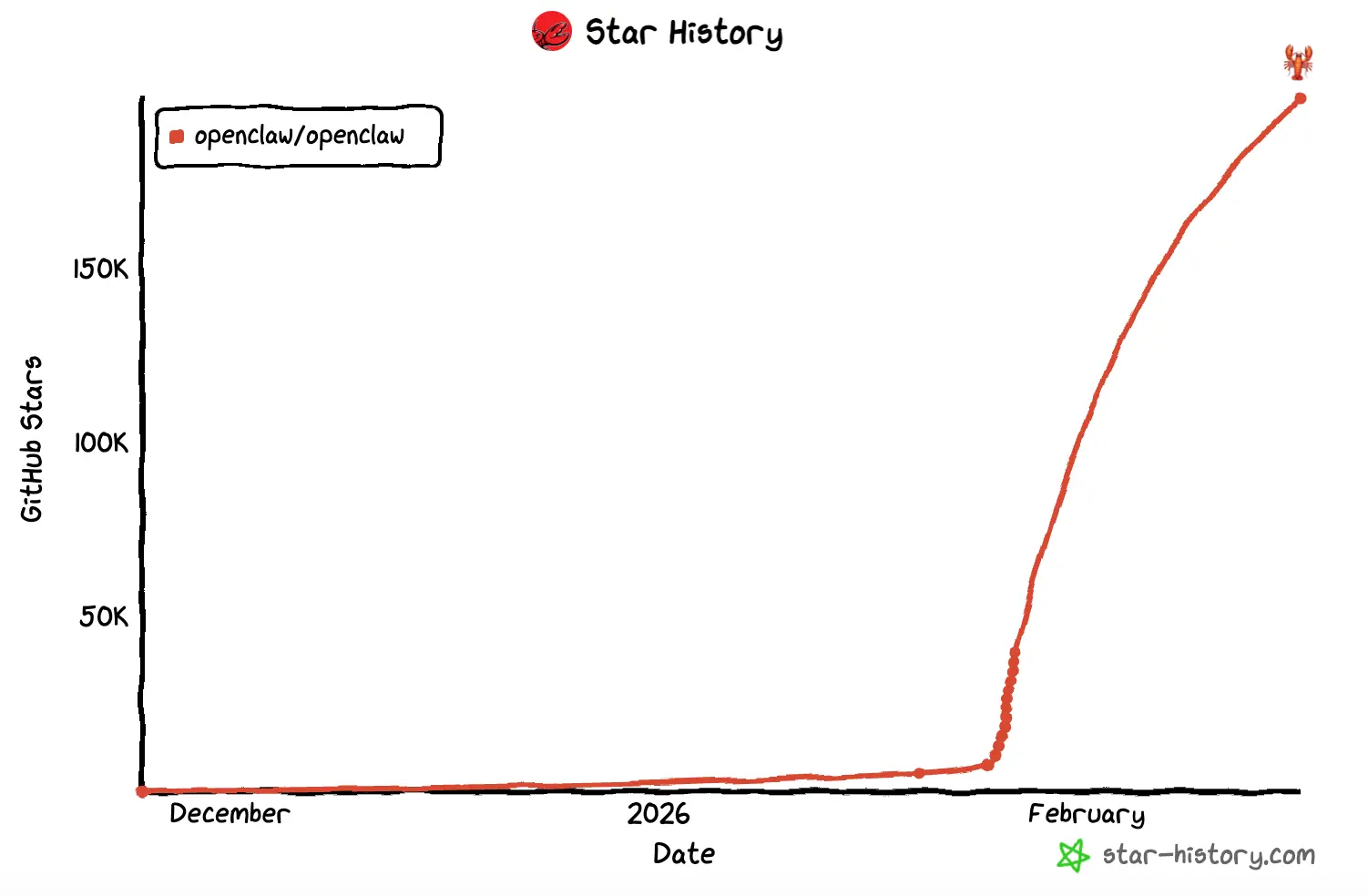
OpenClaw, an open-source, locally-run AI agent, went from a weekend project to over 199,000 GitHub stars in just ten weeks — drawing two million website visitors in a single week. Peter, the project's creator, embedded the Star History chart in OpenClaw's README to show the speed of its rise, and the chart speaks for itself.
After a few chaotic name changes — from Clawdbot to Moltbot, and finally to OpenClaw — the project has found its footing, and now its creator is making his next move: Peter announced he is joining OpenAI to work on AI agents, and is transitioning OpenClaw into an independent, OpenAI-sponsored foundation — open-source, multi-model, and vendor-neutral.
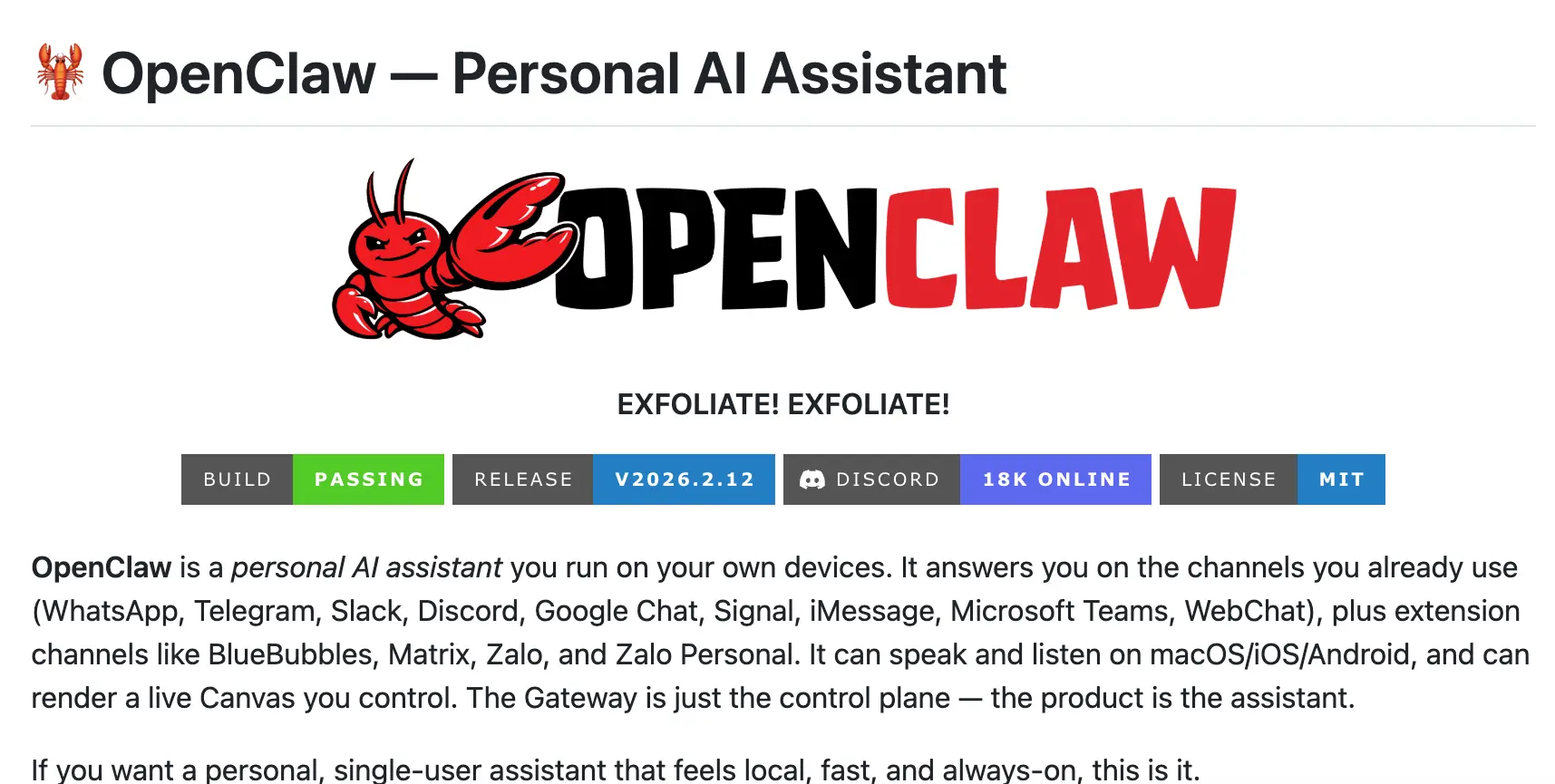
Unlike monolithic AI assistants, OpenClaw is a privacy-first gateway that connects large language models to the chat apps users already have. This has given rise to a vibrant ecosystem of tools, extensions, and deployment strategies. By February 2026, this ecosystem has settled into four distinct layers.
Four Layers of the Claw
- The Skill Ecosystem curates the sprawling catalog of community-built extensions.
- The Core Toolkit provides the foundational agent logic — and a philosophy of self-extension.
- The Deployments offer three radically different ways to run your agent: cloud, bare-metal, and serverless.
- The Agent Browser gives agents a way to browse the real web without getting blocked.
| Layer | Projects |
|---|---|
| Skill Ecosystem | awesome-openclaw-skills |
| Core Toolkit | pi-mono |
| Cloud-Native Deployment | moltworker |
| Bare-Metal Deployment | mimiclaw |
| Serverless Deployment | gitclaw |
| Agent Browser | camofox-browser |
The Skill Ecosystem
awesome-openclaw-skills
🔗 https://github.com/VoltAgent/awesome-openclaw-skills
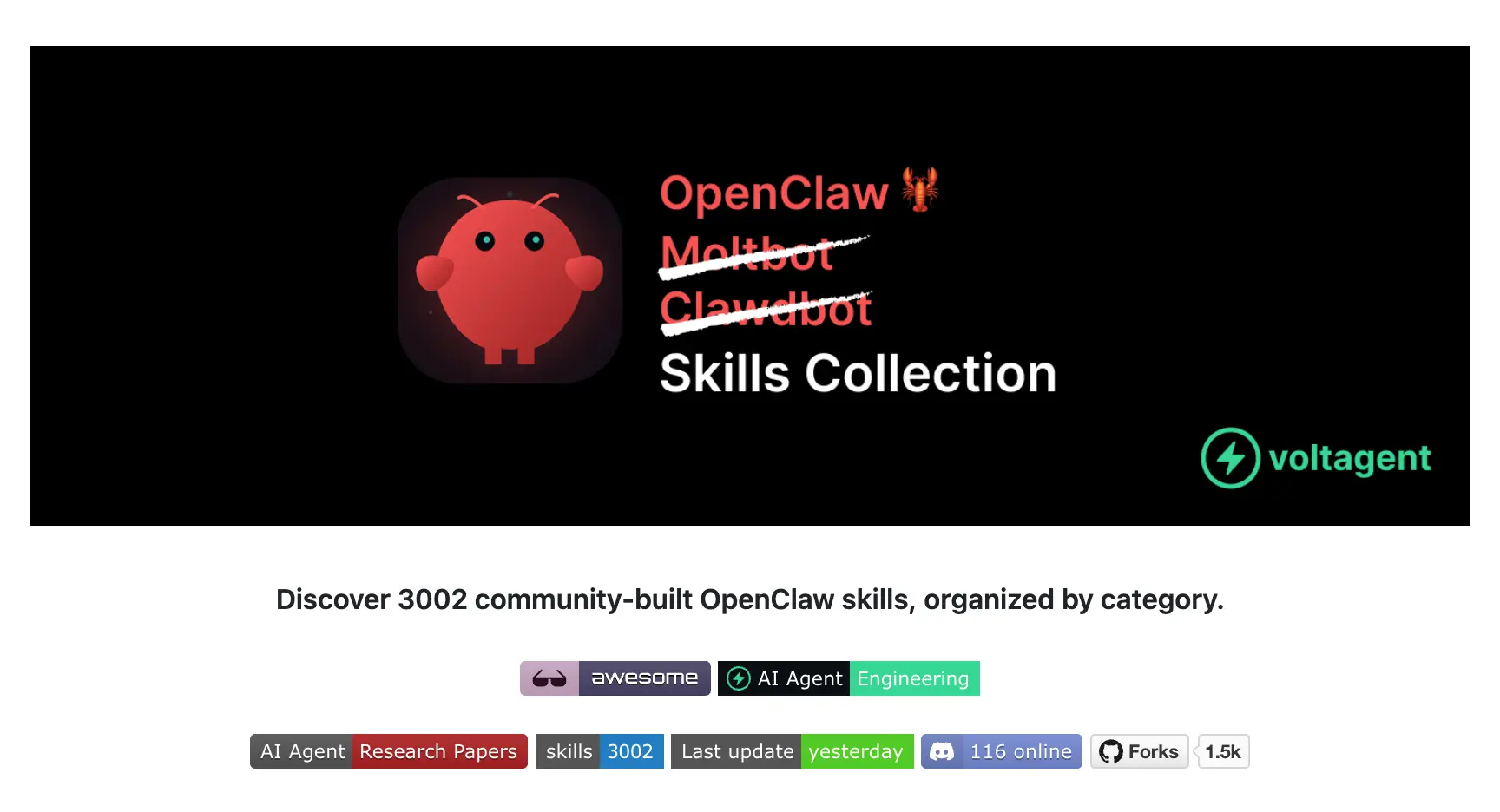
The OpenClaw skill registry, ClawHub, now lists over 3,000 community-built skills. That's the good news. The bad news is that a significant number of them are spam, duplicates, or outright malicious. awesome-openclaw-skills is the community's answer: a curated, categorized, and security-audited list that filters the registry down to what's actually worth installing.
Why it exists
- An ecosystem is only as good as its discoverability. With 29+ categories spanning coding agents, DevOps, search, AI integrations, and more, this list is how most developers will find their first OpenClaw skills — and avoid the ones they shouldn't touch.
Tradeoffs
- Curation is inherently opinionated. The maintainers have excluded entire categories (crypto-related skills, for instance) and the list explicitly warns that inclusion does not guarantee safety. It's a starting point, not a seal of approval.
Best for: anyone setting up OpenClaw for the first time and wondering "what can this thing actually do?" Start here before you start browsing ClawHub directly.
The Core Toolkit
pi-mono
🔗 https://github.com/badlogic/pi-mono
pi-mono is the heart of the OpenClaw ecosystem. Created by Mario Zechner, it provides the foundational components upon which OpenClaw itself is built. Its core, an agent named "Pi" is a masterclass in minimalism, equipped with just four tools: Read, Write, Edit, and Bash.
In January, Armin Ronacher published a post that reframed the project — not as a toolkit, but as a philosophy. The core argument: rather than accumulating features through a plugin marketplace, Pi encourages the agent to write its own tools. Need a code review workflow? Don't download a skill — ask the agent to build one. Ronacher showcases custom extensions he built this way: /answer for reformatting responses, /review for branched code reviews, /todos for task management.
Why it exists
- To offer a robust, minimal, and highly extensible foundation for building AI agents. It is a direct philosophical challenge to the skill-ecosystem model — where
awesome-openclaw-skillssays "curate and discover," Pi says "build it yourself."
- To offer a robust, minimal, and highly extensible foundation for building AI agents. It is a direct philosophical challenge to the skill-ecosystem model — where
Tradeoffs
- The minimalist design means it lacks many features out of the box, such as MCP support. Self-extending agents are powerful but demand more from the developer — you need to trust the agent to write correct code, and there's no community review process for tools that exist only in your session.
Best for: developers who read Ronacher's post and felt something click. If you believe the future of software is software that builds more software,
pi-monois where that future lives.
Three Ways to Deploy
By early 2026, the deployment landscape has split into three camps, each representing a clear philosophical tradeoff: the power of the cloud, the privacy of bare metal, and the elegance of serverless.
moltworker
🔗 https://github.com/cloudflare/moltworker
Cloudflare's official OpenClaw deployment runs the agent in a Sandbox container on their global network. It comes with a web-based control UI, multi-platform chat support (Telegram, Discord, Slack), device pairing authentication, and persistent conversation history. It is, for all practical purposes, your own always-on AI assistant running at the edge.
(And yes — I'm disappointed you don't call it Clawflare.)
Why it exists
- To provide a production-grade, hassle-free deployment path for OpenClaw. Cloudflare Access handles authentication, R2 handles persistence, and the global network handles availability. It even includes browser automation via Chrome DevTools Protocol.
Tradeoffs
- Production-ready means production-priced. At roughly $34.50/month for 24/7 operation on a standard container, plus the $5/month Workers paid plan, this is the most expensive option in the Clawflare. The setup requires familiarity with Cloudflare's ecosystem — Access, R2, Wrangler, API secrets. And it's explicitly a proof-of-concept that "may break without notice."
Best for: teams and power users who need a reliable, high-availability OpenClaw deployment without the burden of managing their own infrastructure.
mimiclaw
🔗 https://github.com/memovai/mimiclaw
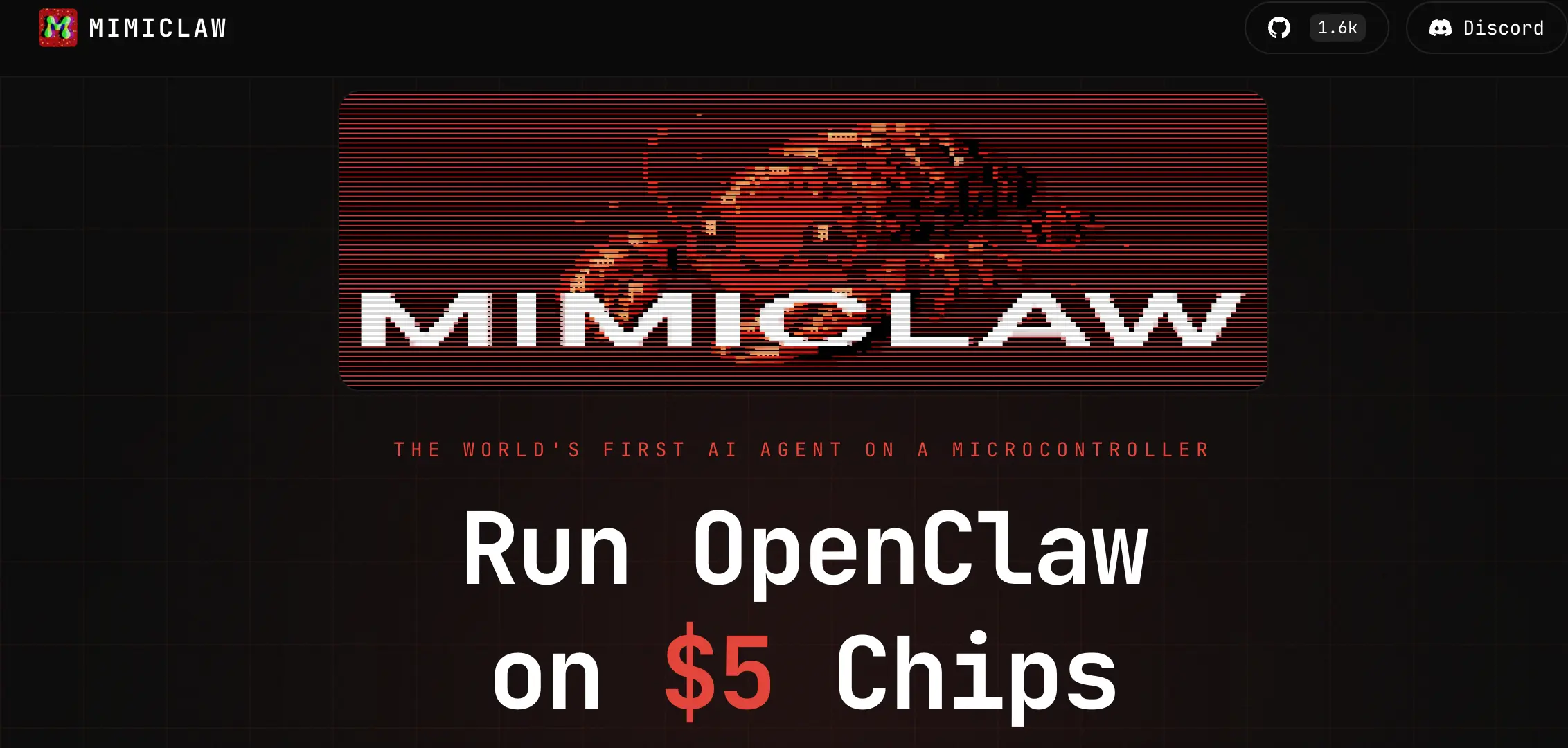
At the opposite end of the spectrum from moltworker lies mimiclaw. This project is a remarkable feat of engineering: a complete reimplementation of the OpenClaw agent architecture in pure C, designed to run on a tiny, $5 ESP32-S3 microcontroller.
Why it exists
- To prove that agentic AI is not the exclusive domain of powerful servers. It champions a privacy-first, local-first model where all data and processing happen on a cheap, low-power device that the user physically owns.
Tradeoffs
- The hardware constraints are significant. It is less powerful and has fewer features than its cloud-hosted siblings. The setup process requires knowledge of embedded systems development, including flashing firmware via a serial connection.
Best for: tinkerers, privacy advocates, and embedded developers.
mimiclawis a compelling glimpse into a future where powerful AI can be truly decentralized and owned by the individual.
gitclaw
🔗 https://github.com/SawyerHood/gitclaw
gitclaw runs an OpenClaw assistant entirely within GitHub Actions. You interact with it by opening Issues and leaving comments. The agent's memory, conversation history, and state are all committed to the Git repository itself — giving it persistent, searchable, version-controlled memory across sessions.

Why it exists
- To create a truly serverless, zero-infrastructure AI assistant. By storing state in Git,
gitclawgives the agent something most deployments lack: long-term memory that the user can inspect, search, and even edit. The agent can read and write files, set up GitHub Pages, and iterate on projects over time — all through the Issues interface.
- To create a truly serverless, zero-infrastructure AI assistant. By storing state in Git,
Tradeoffs
- Every interaction pays the latency tax of a GitHub Actions run. On public repositories, your conversations with the agent are visible to everyone. And you're ultimately bound by GitHub's usage limits and terms of service.
Best for: developers who want a zero-infrastructure AI assistant that lives where their code already lives. Fork the repo, add an API key, open an Issue, and you're talking to your agent.
The Agent's Browser
camofox-browser
🔗 https://github.com/jo-inc/camofox-browser
Here's the problem: you give your agent tools to browse the web, and it immediately gets blocked by Cloudflare, Google, and every other bot-detection system. Stealth plugins? They become detectable fingerprints themselves. camofox-browser solves this at the deepest level — it's a headless browser server built on Camoufox (a Firefox fork) that implements anti-detection at the C++ level, not through JavaScript shims.
Why it exists
- An agent that can't browse the web is an agent with a blindfold.
camofox-browserprovides a REST API that gives agents stable element references, token-efficient accessibility snapshots (~90% smaller than raw HTML), session isolation, cookie import for authenticated browsing, and built-in search macros for Google, YouTube, Amazon, and Reddit. It turns web browsing from an agent's weakest capability into a reliable one.
- An agent that can't browse the web is an agent with a blindfold.
Tradeoffs
- Anti-detection browsing exists in a gray area. The tool is legitimate for agent development and testing, but the same capabilities that let your agent read a recipe blog without getting blocked could be used for scraping at scale. The project is MIT-licensed and makes no judgments — that's left to the user.
Best for: anyone building OpenClaw skills or agents that need to interact with the real web. If your agent has ever returned "Access Denied" when you asked it to check a website, this is the fix.
Closing Thoughts
The rise of OpenClaw in January 2026 was more than just another viral repository. It signaled a shift toward a more decentralized, privacy-focused, and agentic model of AI. The ecosystem that has sprung up around it is not defined by a single product, but by a diversity of approaches — from a curated catalog of 3,000 skills to a philosophy that says your agent should write its own.
Choosing a project from the "Clawflare" is about more than a feature list; it is about choosing a philosophy. Whether you believe in the power of the cloud, the privacy of bare metal, the elegance of serverless, or the autonomy of a self-extending agent, there is a lobster 🦞 in this flare for you.